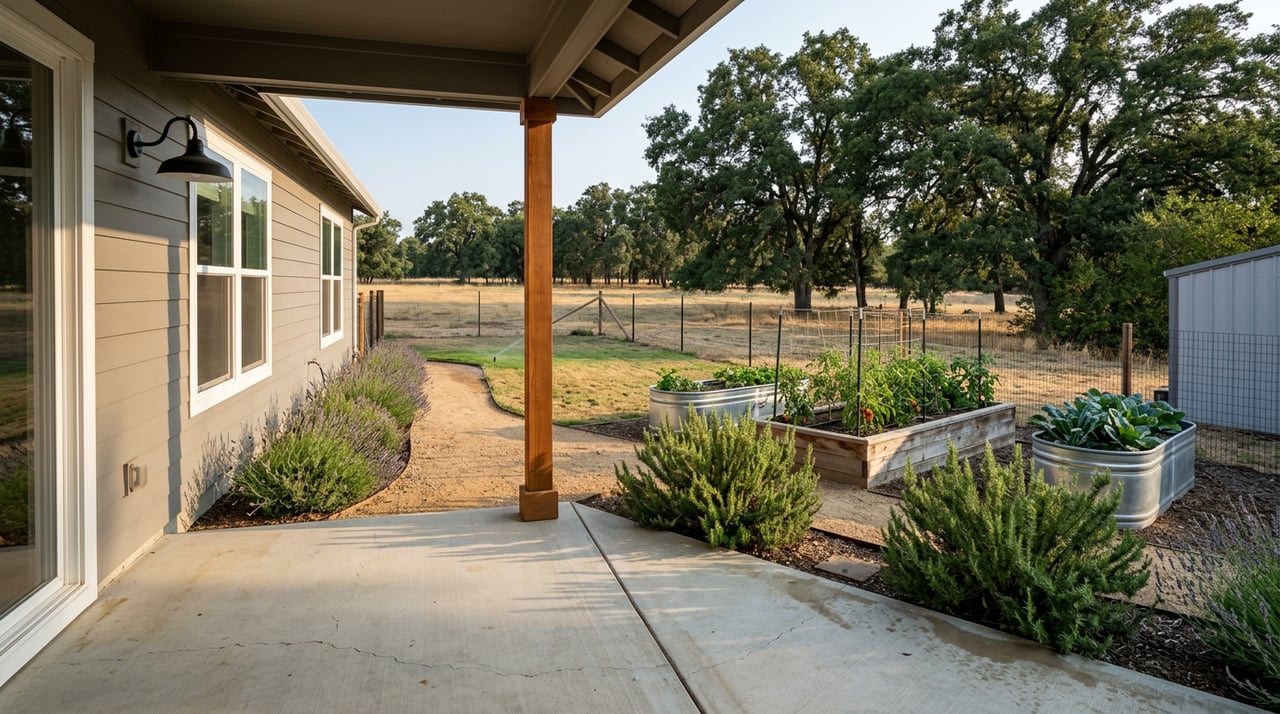
Thinking about a little land without giving up convenience? On 1–5 acres in Loma Rica, you get room to spread out, keep hobbies close, and enjoy foothill views, yet you still have a straightforward drive into town for services. If you are moving from a suburban neighborhood, the rhythm on acreage feels different in the best ways, and it comes with new responsibilities. In this guide, you will see what daily life looks like, how utilities typically work, what to budget for, and the buyer checks that protect your investment. Let’s dive in.
Where Loma Rica fits your life
Loma Rica sits in the rolling foothills of northeastern Yuba County. From most addresses, you are roughly 15 to 20 miles from Marysville, which means a practical 20 to 30 minute drive to full groceries, clinics, and larger retail, according to a typical route analysis on Travelmath’s driving tool.
Zoning in the Loma Rica and neighboring Browns Valley area is largely Agricultural and Rural Residential. County planning documents often cite RR-5 as the base standard for new lot creation, which means a 5-acre minimum for new parcels unless a discretionary approval says otherwise. You will also find some smaller, older lots that predate current rules. For parcel-specific guidance or a written zoning confirmation, contact the Yuba County Planning Department.
If you are planning for school logistics, local elementary campuses such as Browns Valley Elementary are part of Marysville Joint Unified. Expect small rural schools and that some district sites are a 10 to 20 minute drive, based on publicly available School Accountability Report Card information.
What 1–5 acres feels like
On 1 to 5 acres in Loma Rica, you can run raised beds or a small orchard, park a trailer or boat, and keep privacy between you and your neighbors. You can also keep small livestock in many cases. The space gives you flexibility, while lot layout, tree cover, and fencing set the tone for privacy day to day.
Gardening and small orchards
The USDA plant hardiness map places the foothill area around Zone 9b, which supports many Mediterranean fruit and nut trees, citrus in protected spots, and long-season vegetables. Always consider microclimates, slope, and soils on a specific parcel, then plan irrigation for summer. To choose plants that thrive, reference the USDA Plant Hardiness Map.
Animals and hobby livestock
Backyard chickens, goats, a few sheep, or a horse or two are common lifestyle choices on acreage in the planning area. Final permissions depend on zoning, parcel size, and county rules. For animal licensing or to confirm local animal-related regulations, start with Yuba County Animal Care Services and ask Planning to verify permitted animal types and densities for your parcel.
Shops, barns, and storage
Detached shops, metal barns, equipment sheds, and covered RV or boat storage are typical on 1 to 5 acres. Some uses require permits, and certain commercial or event uses may need a conditional use permit. For accessory structure rules and any permit history on a property, the Yuba County Planning Department is your go-to.
The daily rhythm and chores
Acreage living adds hands-on tasks you do not usually see in a suburban yard. Expect fence checks and repairs, pasture or yard mowing, weed and brush abatement in spring and fire season, equipment upkeep, plus well and pump checks and routine septic maintenance. County staff reports for rural projects routinely note these systems and maintenance items as part of normal ownership responsibilities. You can review example requirements and considerations in a representative county staff report package.
Systems you will rely on
Water: private wells
Many Loma Rica homes use private wells rather than a municipal water system. As a buyer, confirm the well log, recent water quality test results, and a functional flow rate. If there is a shared-well agreement, review it closely. New or replaced wells are permitted through county environmental health, and due diligence should include a records check, as reflected in the county’s staff report materials.
Wastewater: septic systems
Onsite septic is the norm for parcels outside sewer service. System capacity, condition, and the designated replacement area can limit future bedroom counts or additional dwellings. Plan on a full septic inspection if maintenance records are incomplete and verify permits and percolation results with Environmental Health, consistent with the guidance in the same county staff report.
Power and gas
Electric service in the foothills is typically via a major regional utility. In rural areas, long overhead lines can be more vulnerable to storms and planned public safety power shutoffs. When you tour, note line distance, meter location, and any planned upgrades so you can discuss reliability and costs directly with the utility.
Internet and cell service
Wired broadband can be limited or uneven depending on the exact address. Many acreage owners use satellite or fixed wireless, and some mix providers for redundancy. Before you plan a home office, check address-level availability and test cell coverage on your carrier at the property.
Road and driveway access
Some parcels have paved county road frontage, while others rely on private gravel roads or shared driveways. Confirm any recorded easements, whether there is a road maintenance agreement, and county encroachment requirements for new or modified driveways. You can see how access and maintenance are evaluated in a sample parcel map staff report.
Fire protection and water supply
Loma Rica and Browns Valley are served by local fire resources, and many parcels sit within mapped High or Very High Fire Hazard Severity zones. Defensible space, building hardening, and accessible water for firefighting are important. To understand local expectations and response, review the Loma Rica–Browns Valley Fire District overview and confirm whether your address is within a mapped hazard zone using the official CAL FIRE statewide hazard maps.
Costs, risks, and rules to budget
Wildfire risk and insurance
In higher wildfire hazard areas, insurers can apply stricter underwriting. Some homeowners see limited carrier options or higher premiums. Before you remove contingencies, request multiple quotes and ask carriers about mitigation steps that help with insurability. Using the official hazard maps helps you understand the site context when you speak with insurers.
Property taxes and assessments
California’s base property tax rate is set by Proposition 13 at 1 percent of assessed value, plus any voter-approved local bonds or special assessments. Review a recent tax bill to see line items for districts that may apply to the property. For an overview of Proposition 13’s basics, see the state’s summary at the California Board of Equalization.
Recurring maintenance costs
Budget for routine septic pumping, periodic repairs, well pump service or replacement, fencing fixes, seasonal mowing and brush reduction, and fuel or propane refills. Set aside a reserve for bigger ticket items like a well pump or septic field repair. These needs are part of the standard rural ownership picture noted in county staff report guidance.
Buyer checklist for Loma Rica acreage
Use this short list during your first review and again in escrow:
- Confirm zoning and permitted uses for the specific parcel. Ask Planning for a written zoning verification and whether the parcel is RR-5 or another designation. Reference the Yuba County Planning Department for details.
- Verify water source. Request the well log, recent water quality test results, and a flow or production test. Review any shared-well agreements.
- Inspect the septic system. Ask for permits, pumping records, and age. If records are thin, order a full septic inspection and confirm there is a replacement area.
- Check road access and easements. Confirm recorded access, private road maintenance agreements, and any encroachment requirements for the driveway. Review a sample county access analysis in staff reports to understand common standards.
- Evaluate fire safety. Look at defensible space, driveway width and turnarounds, and whether water supply meets local expectations. Use the CAL FIRE hazard map to confirm the mapped zone.
- Confirm power and communications. Note distance to power lines, meter location, and test cellular coverage in person. Check internet options by exact address.
- Review permits and building history. Ask for permits on additions, shops, and any conversions. Unpermitted structures can add cost.
- Request insurance quotes. Ask carriers about any required mitigation and renewability guidance in your mapped hazard zone.
- Review the latest tax bill. Look for line items such as school or special district assessments, which add to the 1 percent base tax set by Proposition 13.
When Loma Rica makes sense
If you want more space than a typical neighborhood lot offers, a foothill view, and freedom to garden or keep a few animals, 1 to 5 acres in Loma Rica can be a great fit. You will trade some convenience for privacy, but the 20 to 30 minute run into Marysville keeps daily needs manageable. With well and septic care on your checklist and defensible space a seasonal habit, the lifestyle becomes a rewarding routine.
If you are weighing small acreage in Yuba County, you deserve a guide who knows the foothills and the details that matter. Reach out to Quinn Stacks for local insight, pointed due diligence steps, and a buying plan that fits your goals.
FAQs
How far is Loma Rica from major shopping and clinics?
- Most addresses are about 15 to 20 miles from Marysville, so plan roughly a 20 to 30 minute drive for full groceries, medical clinics, and larger retail.
What utilities are typical on small acreage in Loma Rica?
- Private wells and septic systems are common, overhead electric is typical, and internet can be satellite or fixed wireless depending on address.
What should I know about wildfire risk and insurance in Loma Rica?
- Many parcels are mapped High or Very High Fire Hazard Severity, so plan for defensible space and confirm insurability with multiple carriers before you commit.
Can I keep animals on a 1–5 acre property in Loma Rica?
- Many owners keep chickens, goats, or a horse or two, but you should confirm animal types and densities with county planning and animal services for your parcel.
What inspections should I order before buying an acreage home?
- Order a well evaluation with water testing, a full septic inspection, permit history review, and checks on access, easements, and fire readiness.