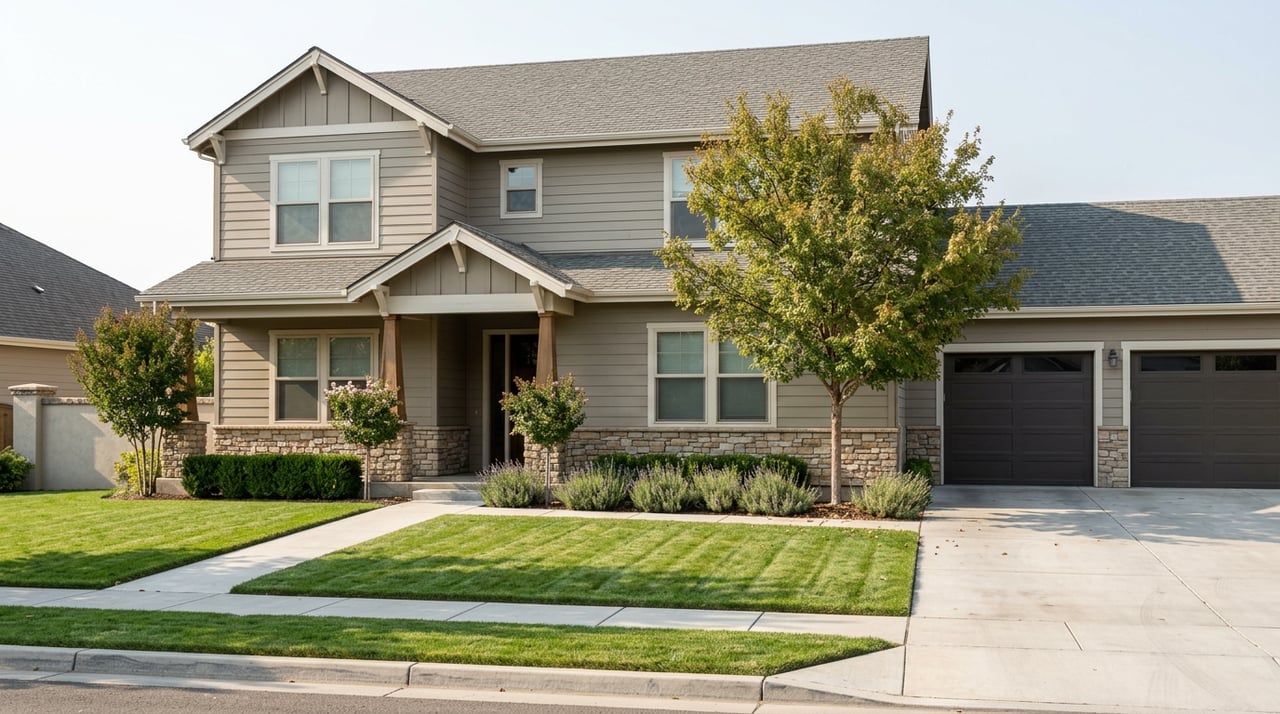
You'd expect the newest house in town to be the one furthest from a working orchard. In Gridley, it's usually the opposite.
Walk the newer streets on the west and south edges of town, the ones with names like Heron Landing and Eagle Meadows, and you're not walking away from agriculture. You're walking straight into it. Every wave of new construction here has pushed outward into land that was farmland the year before, which means the newest subdivisions in Gridley sit closer to active orchards and rice ground than the century-old houses downtown ever did. That's not a coincidence of geography. It's the direction the town has grown for the last two decades, and it's the reason a specific piece of paperwork matters more here than it does in most Sacramento Valley towns.
That paperwork is the Right-to-Farm disclosure, and it's easy to skim past it in a stack of escrow documents. You shouldn't.
The Disclosure Isn't Boilerplate Here
California has required sellers and their agents to disclose farmland proximity as part of a real estate transaction since January 1, 2009. The rule is specific: if a property sits within one mile of land designated on the state's Important Farmland Map, in any of five categories that include Prime Farmland, Farmland of Statewide Importance, and Grazing Land, that has to be disclosed to the buyer. In most Sacramento Valley suburbs, this shows up as a formality, a checkbox next to language about land the buyer will never see or smell. In Gridley, it's describing your actual back fence.
The mapping tool behind that disclosure, the California Important Farmland Finder, is public and worth five minutes of your time before you remove any contingencies. Pull up the address you're considering and look at what's within that one-mile radius. In a lot of Gridley, you won't need the map to tell you. You'll be able to see it from the kitchen window.
What the disclosure doesn't spell out, and what catches people off guard, is what "farmland nearby" actually means for daily life. It means an operation like Fillmore Farms, a certified organic walnut grower working roughly 236 planted acres across two locations in the area, drawing water from both private wells and the Butte Water District, running full harvest equipment on its own schedule. Shaking and sweeping walnuts is loud, it's dusty, and it happens on the tree's timeline, not the neighborhood's.
The Growth Pattern Confirms It
This isn't a one-off risk tied to one unlucky lot. It's the shape of how Gridley has actually built for the past several years.
A 2022 report by the Gridley Herald on the city's growth pipeline laid out a wave of subdivisions moving in the same direction: Village at Eagle Meadows, adding 46 single-family lots south of the existing Eagle Meadows neighborhood. Kiwi Vineyards Estates, bringing 56 more homes at the west end of Spruce Street. Chandler Park Subdivision, a 40-acre project sited directly north of Heron Landing. Valley Oaks Estates and Steffen Estates, both adding batches of single-family lots on the town's edges. Taken together, that 2022 count tallied roughly 588 potential new dwellings working through the pipeline, with the city's population at the time just over 7,300 and expected to climb toward 10,000 as those projects filled in. Some of those projects have likely broken ground or sold out in the years since, but the pattern they set, building outward into farmland rather than infilling the center of town, hasn't reversed.
The builder behind some of that growth, Hilbers New Home Communities, is based in Yuba City.
None of this means new construction in Gridley is a bad buy. Homes here have carried a median price of $399,900 as of May 2026, with the average sale closing around $391,325 and the typical listing spending about 64 days on the market, numbers that reflect a small, steady town rather than a volatile one. What it means is that the diligence checklist for a Heron Landing or Eagle Meadows purchase looks different from the checklist for a similar house in a Sacramento suburb, and skipping that difference is how buyers end up surprised in April when the orchard two lots over starts its dormant spray.
What To Actually Ask Before You Remove Contingencies
- Pull the parcel on the state's Important Farmland Finder yourself and confirm what category of land sits within a mile, rather than relying on a summary line in the disclosure packet.
- Ask your agent or the listing agent to identify the specific crop and grower adjacent to or near the lot, not just "agricultural use nearby." Walnuts, rice, and row crops carry different noise, dust, and timing profiles.
- Ask how long that operation has been active, and confirm the details with Butte County directly rather than assuming.
- If harvest timing matters to you, find out when it happens. Walnut harvest in the Sacramento Valley typically runs through the fall, which is worth knowing if you're touring a spring listing and picturing a quiet backyard.
- Ask whether the property's water comes from a municipal connection or a well. Agricultural neighbors drawing from wells or an irrigation district, as Fillmore Farms does through the Butte Water District, is a different situation than a subdivision fully on city water, and it's worth understanding which side of that line your prospective home falls on.
None of these questions are meant to talk a buyer out of Gridley. They're meant to replace a surprise with a decision you made on purpose.
Why This Cuts Both Ways
If you're the one selling a home in Heron Landing or Eagle Meadows down the road, the same disclosure applies to you, and getting ahead of it tends to work in a seller's favor. Buyers who've already done their own homework on the Important Farmland Finder are less likely to walk from a deal over something they could have learned in escrow. Sellers who can speak plainly about which orchard is next door, what it grows, and when harvest happens usually keep more buyers past the disclosure stage than sellers who let the paperwork do the talking for them.
A Few Direct Questions
Does the Right-to-Farm disclosure ever expire or go away once it's been made? No. It's tied to the parcel's proximity to mapped farmland, not to any one sale. It follows the property to the next buyer and the one after that.
Can I still get financing on a home this close to active agriculture? Plenty of Gridley's newer subdivisions, including Heron Landing and Eagle Meadows, are established, conventionally financed neighborhoods with a track record of resales. The disclosure is a legal notice, not a lending flag on its own, though it's worth discussing with your lender if the parcel sits on well water shared with an agricultural neighbor.
Is there a way to just avoid this entirely? The only way to fully sidestep it is to buy well inside the older, in-town core, away from the one-mile radius of mapped farmland altogether. For most of Gridley's newer housing stock, that isn't realistic, because that's exactly the land the newer subdivisions were built on.
If you're weighing a house in Gridley against something further out, or trying to figure out what a specific orchard-adjacent lot means for your offer, Quinn Stacks has spent enough time in Yuba-Sutter and the surrounding valley towns to walk you through the disclosure line by line before you're locked into a contract. That's a conversation worth having before your contingency period, not during it.
This article is general information, not legal, tax or financial advice. Consult a qualified professional about your situation.