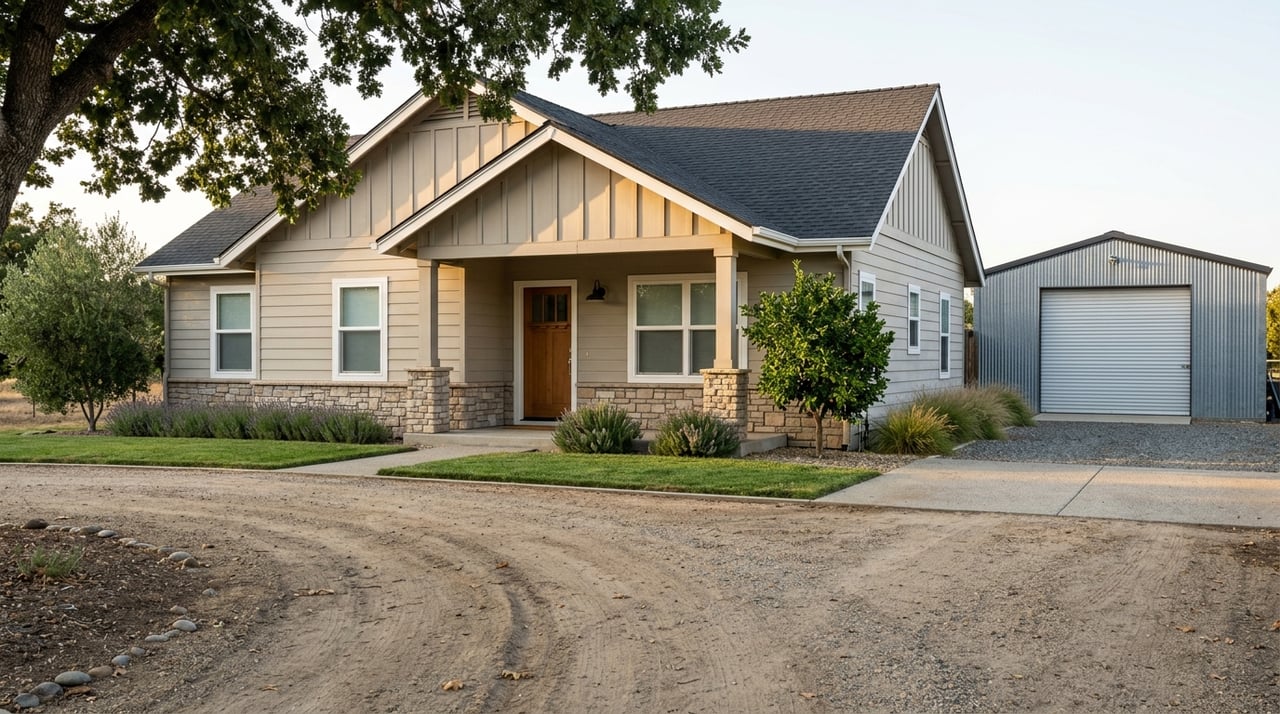
Thinking about trading your in-town Sutter home for a little more space? It can be an exciting move, but acreage comes with a very different set of decisions than a typical neighborhood purchase. If you want more land, more privacy, or room for a hobby setup, you also need a plan for timing, taxes, utilities, and due diligence. Let’s break down what to know before you make the jump.
Why this move takes planning
Moving from an in-town home to acreage is not just about square footage or a bigger lot. In Sutter County, rural properties often fall under different zoning rules and may rely on private systems instead of public utilities.
That means your next move should start with two questions: how much equity you can bring forward, and what kind of parcel you actually want to own. A clear plan helps you avoid surprises and gives you more confidence when the right property shows up.
Start with your equity and timing
If you already own in Sutter, your current home may be the key to making an acreage move possible. Countywide data from Zillow estimated the average Sutter County home value at $439,839 as of May 31, 2026, with homes going pending in around 14 days.
That does not predict what your home will sell for, but it does suggest a fairly active local pace. If you are planning to sell and buy at the same time, it helps to assume you may need to move quickly once your home hits the market.
Why selling first often makes the math easier
For many homeowners, selling first creates a clearer picture of available proceeds. It can also reduce the risk of carrying two homes at once, which matters even more when your next property may have higher insurance, utility, or maintenance costs.
Your budget should include more than the purchase price. You will also want to account for down payment, taxes, insurance, closing costs, moving expenses, and any immediate property work.
Understand possible tax treatment on your sale
If the home you are selling is your principal residence, you may qualify for a capital gains exclusion. The IRS says eligible homeowners may exclude up to $250,000 of gain, or up to $500,000 on a joint return, if ownership and use tests are met during the five-year period ending on the sale date.
California generally follows the same principal-residence exclusion rules. In general, that means you must have owned and used the home as your primary residence for at least 2 of the last 5 years.
Even if gain is excluded, your sale may still involve reporting requirements. The IRS notes that a sale may still need to be reported if Form 1099-S is issued, and California withholding paperwork such as Form 593 may apply depending on the facts of the transaction.
Watch for supplemental property taxes
In Sutter County, a change in ownership or major improvement can trigger a supplemental assessment. The county also notes that the tax year runs from July 1 through June 30, and supplemental tax bills can be prorated based on timing.
This matters when you are comparing homes or estimating monthly costs. A payment change after closing can affect your real budget more than many buyers expect.
Know how Proposition 19 may affect your move
For some homeowners, Proposition 19 can change the financial picture in a meaningful way. The California Board of Equalization says eligible homeowners may transfer a base-year value under age 55, disability, or disaster-related provisions.
There is an important timing detail here. The claim is filed only after both transactions are complete and after you are living in the replacement home, and it is not handled through escrow.
If you buy the replacement property before your current home sells, you generally pay property taxes on the new home at its full fair market value until the original home closes. That temporary carrying cost can make a buy-first strategy feel very different from a sell-first plan.
Acreage means a different type of property
Acreage in Sutter County is not just a larger version of an in-town lot. It may sit in a zoning district with different parcel standards, utility expectations, and limits on future changes.
That is why it helps to think of a ranchette as both a lifestyle choice and a land-use category. Before you fall in love with a view or a fence line, confirm what the parcel actually allows.
Understand common zoning categories
Sutter County code says the Ranchette, or RAN, district is intended for large-lot residential uses and small farms. It allows parcel sizes from 3 to 10 acres and does not allow new future allocations or further subdivision of existing ranchette lots.
The Estate Residential, or ER, district allows parcel sizes from 0.5 to 3 acres. On lots served by individual well and septic systems, the minimum lot size may be determined by the Environmental Health Division, not zoning alone.
This distinction matters if you hope to split land later, add uses, or simply understand the long-term value of the property. The county planning portal and GIS tools are the official starting point for zoning, flood zones, and land-use checks.
Private wells and septic change ownership
One of the biggest differences between neighborhood living and acreage ownership is infrastructure. Instead of public water and sewer, you may be responsible for private systems that need regular testing, inspection, and maintenance.
Sutter County Environmental Health provides information on water wells and septic systems, including permits, soil testing, and system details. The State Water Resources Control Board says the well owner is responsible for making sure the water is safe.
The Department of Water Resources recommends inspecting a private well at least once a year and testing water quality regularly. EPA guidance says the average septic system should be inspected every 1 to 3 years and pumped every 3 to 5 years.
Questions to ask before removing contingencies
Before you move forward on acreage, ask for records early and review them carefully. Focus on the systems that can create major cost or usability issues.
- Is the property on public utilities, a private well, a septic system, or some combination?
- Are there well records, septic permits, inspection reports, or water-quality results available?
- Has the septic system been serviced recently?
- Are there any known repair needs or capacity limits?
Flood, drainage, and road access matter more
Rural property often brings site-specific concerns that you may not think about when buying in town. Floodplain rules, drainage conditions, and access routes can all affect your use of the property and your cost of ownership.
Sutter County participates in the National Flood Insurance Program and says floodplain development permits are required for development, filling, or grading in mapped floodplains. If a structure will be built in a floodplain, an elevation certificate is required.
The county also notes that Sutter County is protected by more than 260 linear miles of levees, with some segments not meeting newer federal standards. For a buyer, that means flood review should happen early, not after you are deep into the transaction.
Road conditions can also look different outside town. County roads may close because of flooding, levee work, failed culverts, or maintenance issues, so access is something to evaluate as part of day-to-day livability.
Insurance and fire preparation should come early
Insurance is one of the smartest early checks you can make on acreage. The California Department of Insurance says CAL FIRE hazard maps do not control insurance rates or availability because insurers use wildfire risk models and other underwriting tools.
In practical terms, that means two rural properties with a similar look may not get the same insurance outcome. Getting a quote early can help you avoid budget surprises.
CAL FIRE says defensible space is required by law under Public Resources Code 4291 and that 100 feet of defensible space is required, with the first 5 feet closest to the home being especially critical. Local agencies may apply stricter standards.
If you are considering acreage, look beyond the house itself. Landscaping, fencing, outbuildings, and fuel storage can all affect how the property functions and what it may require after closing.
Build a realistic move-up checklist
Acreage buyers usually do best when they follow a step-by-step plan instead of treating the search like a standard suburban purchase. A little structure now can save a lot of stress later.
Here is a simple checklist to keep your move grounded:
- Estimate your sale proceeds and review how much equity you can apply to the next purchase.
- Confirm whether you may qualify for the principal-residence gain exclusion.
- Review whether Proposition 19 could apply to your situation.
- Check zoning through the county GIS and planning tools.
- Verify utility setup, including well and septic if applicable.
- Review flood zone information and permit requirements.
- Request an insurance quote early.
- Budget for inspections, maintenance, moving costs, and possible property work after closing.
A smoother move starts with local guidance
Moving from in-town Sutter to acreage can be a great next step, but it works best when your plan matches the property type. The right strategy balances your sale timing, tax picture, monthly budget, and the realities of rural ownership.
If you are weighing whether to sell first, buy first, or simply want to understand what your current home could fund, local insight makes a big difference. For a personalized home valuation and a move-up strategy built around your goals in Sutter and the surrounding Yuba-Sutter area, connect with Quinn Stacks.
FAQs
What should you check before buying acreage in Sutter?
- You should confirm zoning, utility type, well and septic records, flood zone status, road access, insurance availability, and any permit requirements before removing contingencies.
How is a ranchette different from an in-town home in Sutter County?
- A ranchette is often subject to different zoning rules, parcel-size standards, and infrastructure expectations, including possible reliance on private well and septic systems.
Can you split a ranchette parcel in Sutter County later?
- Not always. Sutter County code says the RAN district does not allow new future allocations or further subdivision of existing ranchette lots.
When can Proposition 19 help with a move in California?
- It may help eligible homeowners under the age 55, disability, or disaster-related provisions transfer a base-year value, but the claim is filed only after both transactions are complete and after you are living in the replacement home.
Why should you get an insurance quote early on acreage near Sutter?
- Rural properties can have different underwriting outcomes based on wildfire risk, open land, trees, flood exposure, and other property-specific factors, so an early quote helps you budget more accurately.